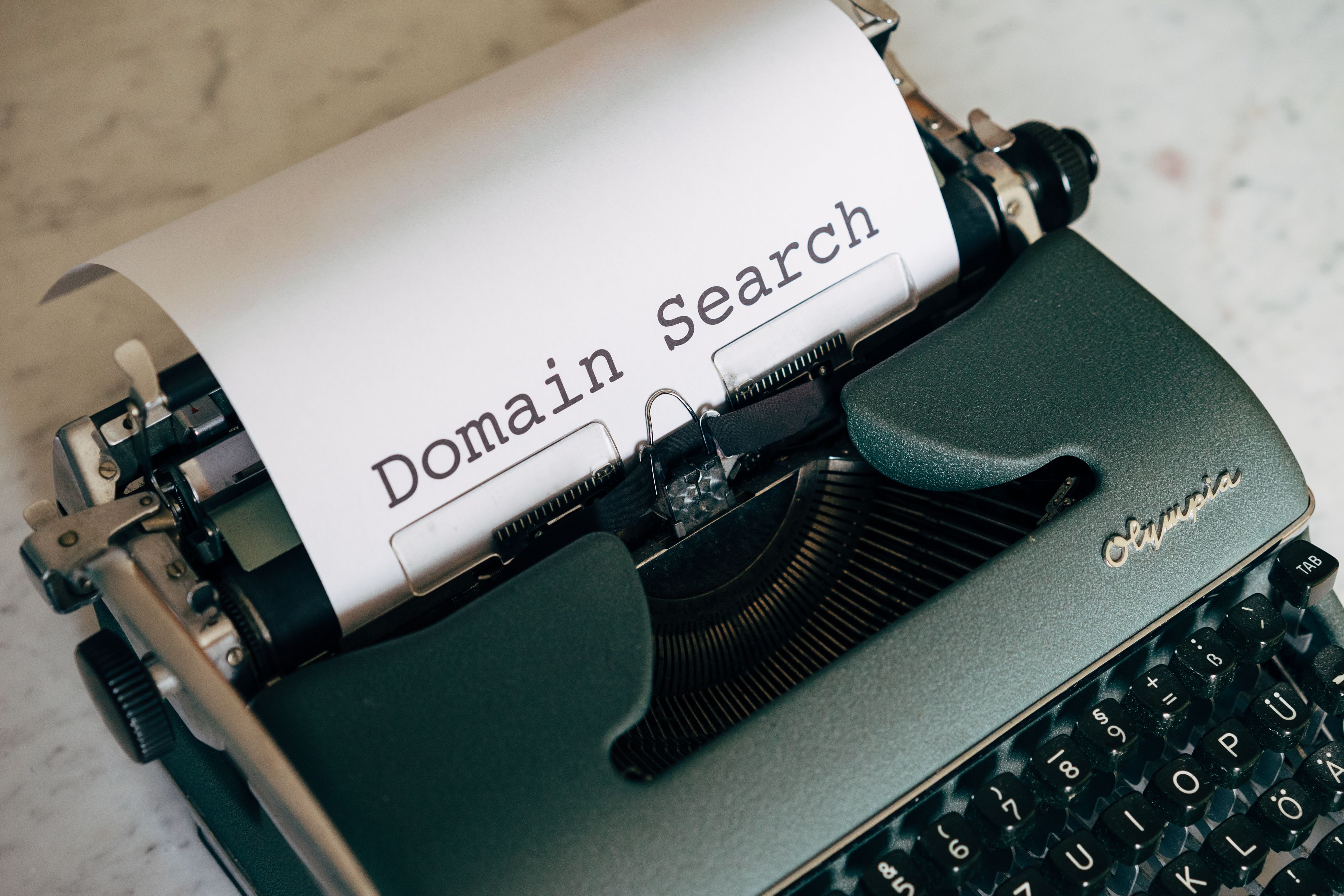

Title: The Quiet Deed Beneath the Click: How a Domain Becomes Our Invisible Real Estate
The moment you press Enter, a simple, almost casual keystroke becomes a descent into a city you cannot see. You type a word, then a dot, then com, and the browser obliges—a brief, almost magical pause, and you’re there: a page unfurls, a website hums to life. In that single, ordinary second, your brain experiences a whisper-quiet miracle: a complex choreography of routers, resolvers, and cables rearranging themselves to fetch a modest slice of the web. The ease is so complete, so ordinary, that the underlying architecture looks like air.
But the ease is a lie we tell ourselves every day.
The image of the browser bar as a doorway reflects a deeper truth: the internet is not a map of addresses but a living ledger of trust, access, and permission. The act of typing a domain name is not merely asking a server to respond; it is enlisting a digital contract in a global registry, a legal deed encoded in cryptographic form, a cognitive shortcut that lets us pretend, for a moment, that the online world is a seamless extension of human language. A domain name is where language, law, and infrastructure converge—an artifact of civilization that makes the sprawling network feel intimate, personal, memorable, and mine.
The domain is more than a house with a sign on it. It is a global coordinate, a front door to a digital identity, and a durable promise that a particular path will lead you somewhere trusted again and again. It is the brand you think you own, the memory you want others to conjure when they hear your name spoken through a screen. It is the cognitive anchor for a website’s reputation, a beacon that travelers of the web instinctively recognize. You type a word and—boom—your mind attaches intention to that sound, and the network obliges with a predictable ritual: look up, route, fetch, render.
The history behind this elegant simplicity is not a straight line but a delicate negotiation between human language and the machine’s stubborn precision. Humans traded numerical IP strings for readable, pronounceable names—an act that sounds almost magical until you realize it required an ecosystem of trust: registries, registrars, root servers, and the delicate choreography of bottom-layer protocols. The DNS became not merely a directory but a shared Cognitive Architecture, a social contract that says: we will remember a name, we will resolve it to an address, and we will do so with enough redundancy that a single earthquake of a backbone cable cannot erase the road to a site you expect to visit.
This is where the modern civics of the internet reveal their strange ethics. A domain represents a legal deed in the digital commons: a claim staked in trademark law, a record of ownership in a world that has neither borders nor seats but rather layers of consensus and cryptography. When you register a domain, you are formalizing a future commute—your visitors’ first step into your idea, your product, your message. It is a commitment that the world will recognize your intended destination, that your digital presence will persist across the forks of time as long as you honor the agreement that binds you to it. And because this deed travels through registries that operate with procedural gravity—policies, renewal cycles, questions of sovereignty—the very act of owning a domain becomes a study in responsibility as much as prestige.
We rarely pause to consider the infrastructure that makes a search bar’s whisper disappear into a cascade of real-time decisions. The “invisible nervous system” of the web is not the gleaming, heroic backbone of neon-lit data centers but a patient network of relationships: domain name registries, authoritative root servers, top-level domain authorities, the caching resolvers that sit in your ISP’s basement or your laptop’s cache, the fiber lines buried in cities, the undersea cables crossing oceans, the routers that choose the fastest path through a tangled web of possible routes. Each layer is built not for glamour but reliability: redundancy, latency minimization, fraud detection, policy compliance, internationalized domain names for a planet of languages. It is a system engineered for a paradox: to vanish from sight at the moment you need to feel its truth most acutely.
And yet, in our culture, we are marvelously blind to this infrastructure—until a quiet crisis reveals it. Consider a database entry, a search result, and the moment before you click “buy” or “register.” In that posture of anticipation, a cascade begins even before your cursor tips the balance. The domain you sought may already belong to someone else, snatched the moment you whispered its name into a digital marketplace. The registrar’s interface—an ordinary panel with fields and check marks—grounds itself in real politics: auctions of names, policy decisions, jurisdictional quirks, the ephemeral nature of digital property. A single search is not only a curiosity about availability; it is a potential prologue to a real transaction that commits a chunk of the world’s blue glass and copper to a new owner’s intent. The moment your gaze rests on the “Available” badge, you glimpse a larger theatre: the quiet market, the legal frameworks, the risk calculations, the human stories behind every successful or failed registration.
We live with a curious blindness to the fragility and beauty of this system. The internet’s domains could be snatched away at any moment by policy changes, by a registrar’s business decision, by a misconfigured DNS record that cascades into unreachable pages. The human fear is not that the world will stop naming things; it is that we will forget how to confirm, verify, and protect those names. The domain is supposed to be a stable address, but stability, like trust, is a practice. It lives in the daily rituals of renewal reminders, whois privacy debates, lock-and-transfer procedures, and the stubborn insistence that a single character difference can spell the difference between a flourishing brand and a lost opportunity.
What does a domain do for us, in truth? It does several things at once. It is a symbol—a readable token in a universe of numbers. It is a stake in a shared future—an entity that requires upkeep and legal attention, a reminder that online presence is not a one-time act but a continuing relationship with customers, readers, collaborators. It is a cryptographic anchor—a point in the global DNS that ties a human-made name to a machine-usable address through a series of signed records and trust hierarchies. It is also a fragile bridge—routing information travels through a web of critical infrastructure that spans continents, relying on consent, cooperation, and careful maintenance.
To wander the thought with the question in mind: if a single search could lead to a name being seized the next day, what does that reveal about the nature of digital ownership? It reveals, perhaps, that the dream of seamless, frictionless access to information rests on a stack of agreements, a tapestry of registries and policies, a shared belief that a name deserves protection and that the public can rely on the web’s promises to be navigable. It shows us that convenience is a carefully balanced illusion—one that depends on a quiet, relentless discipline: the maintenance of whois records, the integrity of zone files, the vigilance of registrar operators, and the humility to admit that power is concentrated in the hands of those who manage the keys to the kingdom.
And so we stand at the edge of wonder, not cynicism. There is a poetry to this architecture that resists reduction to “just a link.” The domain name is a microcosm of civilization’s longing: to translate the world’s infinite edges into a form we can remember, speak, defend, and entrust. It is the modern analog of land ownership, stamped not on soil but on a ledger that floats above continents, carried by dozens of undersea cables and breathing through the pulses of billions of DNS queries every day. The domain teaches us to see the web as not a single, perfect portal but a living system of permission, trust, and resilience—a system that asks us to care for it with the same steadiness we apply to any other fragile, valuable resource.
As you navigate your daily routes across the internet—from the news site that informs you, to the blog that inspires you, to the tool that helps you build—remember the unseen scaffolding beneath your keystrokes. That innocent-seeming URL is a badge of access to a sprawling, interdependent machine. It is a contract etched in code and policy, a story that begins with a name and ends in a path through a world of routers and registries. The next time you search for a one-word domain, consider not just the instant of discovery, but the years of governance, risk, and cooperation that keep that name resolvable across the globe.
The digital landscape is not static; it breathes, adapts, and, crucially, requires stewardship. Our daily convenience—typing a word and landing somewhere—depends on a quiet and stubborn faith: that the domain system will keep its promises, that names will endure, that the infrastructure will keep responding when we need it most. The illusion of ease is a trusted veil over a network that is, in truth, a fragile, human-made tapestry. And this awareness—this tempered awe—may be the most intimate form of respect we can offer to the internet’s invisible nervous system: a system we did not build alone, and which we must tend with care if we want to keep the world feeling within reach.